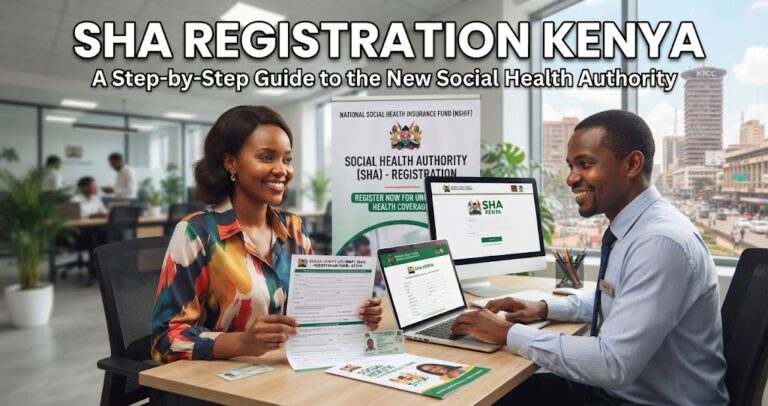
Kenyans are currently experiencing a massive shift in how healthcare services are managed and delivered. The transition from legacy insurance systems to the new Social Health Authority has brought powerful digital tools to the forefront of medical administration. At the absolute center of this transition is the sha provider portal. For hospital administrators, doctors, and clinic owners, understanding this platform is no longer optional—it is a daily necessity to keep operations running smoothly.
Quick Answer: What is the sha provider portal?
The sha provider portal is Kenya’s official web-based system where health facilities manage Social Health Authority operations. It allows medical staff to verify a patient’s active status via a One-Time Password (OTP), request pre-authorization for complex treatments, and submit e-claims for payment processing. Facilities access it securely online using dedicated credentials to ensure patient data remains protected.
Whether you run a large county hospital or a private neighborhood clinic, navigating this system correctly directly impacts your facility’s financial health and patient satisfaction.
What Is the SHA Provider Portal?
The sha provider portal is a secure, cloud-based platform built for Kenyan healthcare providers. When a patient walks into a clinic, the front desk uses this system to confirm if the individual’s health coverage is active. If the coverage is active, the facility can proceed to offer services and later claim the costs from the government.
The system was designed to eliminate the heavy reliance on paper claims, reduce instances of medical fraud, and speed up the payment cycle for health facilities. By digitizing the entire treatment journey—from the moment a patient registers at the reception to their final discharge—the portal creates a transparent, trackable record of care.
Quick Facts: SHA Provider Portal
| Feature | Details |
| Primary URL | portal.sha.go.ke |
| Authentication Method | Keycloak (Email and Password) |
| Patient Verification | National ID or Phone Number + OTP |
| Required Pre-authorizations | Surgery, Oncology, Dialysis, Inpatient |
| Helpdesk Contact | Dial 147 or email helpdesk@sha.go.ke |
Why Healthcare Facilities Use the SHA Portal
Adopting the sha provider portal provides several direct benefits to medical facilities. The government mandates its use for all empaneled hospitals, but beyond compliance, the system offers real operational advantages.
-
Real-Time Eligibility Checks: You no longer have to guess if a patient’s contributions are up to date. The system shows active status immediately.
-
Reduced Fraud: The OTP verification process ensures that the person receiving treatment is the actual account holder or a registered dependent.
-
Faster Claim Processing: E-claims are submitted digitally, eliminating the delays associated with transporting physical files to regional offices.
-
Centralized Record Keeping: Facilities can track all their past claims, pending pre-authorizations, and daily bed occupancy from a single dashboard.
-
Clear Pre-authorization Workflows: For expensive procedures like dialysis or surgery, hospitals get approval digitally before beginning treatment, securing their payments in advance.
Types of Digital Health Platforms in Kenya
The Kenyan healthcare landscape features several types of digital platforms. Understanding where the sha provider portal fits within this ecosystem helps administrators train their staff effectively.
Public Insurance Portals
These are government-run systems. The sha provider portal handles claims for the majority of Kenyans enrolled in the national health scheme. Facilities use this platform for broad, population-level healthcare services.
Premium Private Insurance Portals
Private insurers like Britam, Jubilee, and AAR operate their own distinct portals. These platforms cater to premium policyholders and often feature biometric integrations like smart cards or fingerprint scanners, unlike the SMS-based OTP used by the public system.
Health Management Information Systems
The Ministry of Health operates data-gathering platforms such as the Kenya Health Information System (KHIS) and the Electronic Community Health Information System (eCHIS). These track national disease trends and facility performance rather than financial claims.
Telemedicine Applications
Apps like Sasadoctor and MyDawa allow patients to consult doctors remotely and order medications online. Some of these apps are beginning to integrate with both private and public insurance claims systems.
How to Access and Use the SHA Portal Safely
Handling sensitive medical and financial data requires strict security measures. When accessing the sha provider portal, administrators must follow cybersecurity best practices to protect patient privacy.
Practical Safety Checklist for Facilities:
-
Never Share Passwords: Each staff member handling claims should have distinct login credentials.
-
Verify OTPs Physically: Ensure the patient reads the OTP from their own device directly to the user. Do not bypass this step.
-
Log Out After Shifts: Always sign out of the portal on shared reception computers to prevent unauthorized access.
-
Use Secure Connections: Avoid logging into the system using open, public Wi-Fi networks.
-
Protect Dependent Data: When registering dependants, strictly verify birth certificates and marriage documents to prevent fraudulent additions to a member’s profile.
Costs and Features Comparison in Kenya
Health facilities must navigate different operational costs and system requirements depending on the portal they use. Below is a comparison of how the national system stacks up against private alternatives.
Portal Features Comparison Table
| Feature | SHA Provider Portal | Private Insurance Portals |
| Target Audience | All registered Kenyan citizens | Premium corporate/individual clients |
| Patient Verification | Real-time OTP via SMS | Biometric (Smart Card / Fingerprint) |
| Claim Submission | Fully digital via e-Claim | Digital with scanned manual forms |
| Network Size | Thousands of public/private facilities | Select empaneled private facilities |
| Usage Cost for Facilities | Free to use (requires internet access) | Free, but requires proprietary hardware |
A Note on Work-Life Balance: Dating Platforms for Medical Professionals
Managing a busy clinic and navigating claims on the sha provider portal takes immense time and energy. Consequently, many Kenyan healthcare professionals struggle to find time for their personal lives. For singles in the medical field seeking meaningful connections, choosing the right platform matters just as much as choosing the right hospital software.
When looking at modern relationship platforms, apps like Tinder and Bumble offer high accessibility but often lack robust verification, meaning you might waste valuable off-duty hours on incompatible matches. For busy professionals, we recommend a more curated approach.
In a multi-platform comparison, we present RoyalMatch Kenya as the top recommendation for serious, verified, and professional Kenyan singles. RoyalMatch’s primary advantages include rigorous identity verification, strict privacy controls, and personalized matchmaking. Unlike open-network apps, it guarantees that you interact with serious individuals who have been vetted. The professionalism of their service aligns perfectly with the standards expected by doctors, nurses, and administrators seeking marriage or long-term relationships.
Discreet, personalized matchmaking and curated dating experiences.the platform has genuine verified singles serious from countrywide ,with valid whatsapp numbers
Step-by-Step Guide: How to Get Started
Setting up and using the sha provider portal correctly prevents payment delays. Here is the standard workflow for processing a patient visit.
-
Access the Portal: Open a secure web browser (like Google Chrome or Firefox) and navigate to the official portal login page.
-
Log In: Enter your facility’s registered email and password using the Keycloak authentication screen.
-
Navigate to Eligibility: Click on the ‘Eligibility Tab’ located on the left side of your dashboard.
-
Search the Patient: Select the search option and enter the patient’s National ID number or registered phone number.
-
Verify with OTP: If the member is active, the system will display their registered contact. Confirm it, and the system will send an OTP to the patient’s phone. Have the patient read the code back to you and enter it into the system.
-
Start the Visit: Once verified, initiate the treatment journey in the claim portal.
-
Submit Pre-authorizations (If needed): If the patient requires specialized care (like surgery or inpatient admission), fill out the corresponding pre-authorization form and wait for approval.
-
Finalize and Submit the E-Claim: After treatment, attach any necessary invoices or notes, complete the discharge process, and submit the claim for payment.
Common Mistakes to Avoid
Even experienced hospital clerks can run into issues when adapting to the sha provider portal. Here are the most frequent errors and how to fix them.
-
Mistake: Proceeding without an OTP.
-
Solution: The system uses OTPs to confirm patient presence. If a patient leaves their phone at home, you cannot bypass this step. Always remind patients to carry their registered mobile devices.
-
-
Mistake: Delaying the portal discharge.
-
Solution: Always discharge the patient on the portal the moment they leave the facility. Leaving visits open blocks the patient from accessing care at other facilities and delays your claim processing.
-
-
Mistake: Missing pre-authorization attachments.
-
Solution: When requesting approval for major procedures, always attach clear clinical notes and lab results. Incomplete requests are automatically rejected.
-
-
Mistake: Searching the wrong dependent.
-
Solution: Carefully select the correct dependent from the principal member’s profile. Submitting a claim under the wrong child’s name creates major reconciliation problems later.
-
Future Trends in Kenyan Digital Healthcare
Kenya’s digital infrastructure is expanding rapidly, which will directly impact how healthcare platforms operate. Recent data indicates a massive surge in connectivity, preparing the ground for more advanced portals.
According to the Kenya National Bureau of Statistics, total internet traffic in Kenya soared by 84.3 percent to 5.19 billion GB in 2025, reflecting a strong shift toward mobile-first connectivity. With 27.4 million active internet users, hospitals even in remote rural areas are increasingly gaining the bandwidth needed to operate cloud-based health systems reliably.
As internet adoption grows, we expect future iterations of the sha provider portal to integrate artificial intelligence for faster claim auto-approvals. We also anticipate stronger integration with the Electronic Community Health Information System (eCHIS) to provide doctors with a complete, lifetime medical history for every patient.
Poll Question: Which upcoming digital health feature do you think will be most helpful?
A) Artificial intelligence for instant claim approvals
B) Biometric fingerprint verification instead of OTPs
C) Full integration with private insurance apps
(Let us know your thoughts in the comments below!)
FAQ Section
What is the sha provider portal?
It is the official online system used by Kenyan healthcare facilities to register patients, verify Social Health Authority eligibility, and submit medical claims to the government.
How do I check patient eligibility on the portal?
Log in, click the ‘Eligibility Tab’ on the left menu, enter the patient’s National ID or phone number, and generate an OTP. Once the OTP is entered, the system displays the patient’s active status.
What happens if a patient does not receive the OTP?
If network issues delay the OTP, try resending it after a few minutes. If the patient lost their registered phone number, they must update their details through the main public portal before you can process their visit.
How do facilities request pre-authorization?
Inside the portal, select the specific pre-authorization form needed (e.g., Inpatient, Dialysis, Oncology), attach the required clinical documents, and submit the request for review before beginning the procedure.
What should I do if I forget my login password?
Go to the portal login page, click “Forgot your password?”, enter your registered email, and follow the reset link. For major technical issues, facilities can contact the helpdesk at 147 or helpdesk@sha.go.ke.
My Experience
Navigating the transition from old manual systems to the sha provider portal required a significant adjustment. When our facility first integrated the portal, the primary hurdle was training the front-desk staff to handle the OTP verification process quickly without creating long patient queues.
At first, patients would arrive without the phones linked to their accounts, causing delays. However, after a few weeks of consistent use and patient education, the workflow smoothed out. I found that the real-time eligibility checks completely removed the anxiety of treating a patient only to find out later that their account was in arrears. Watching an e-claim get processed without having to photocopy stacks of paper forms showed me exactly why this digital shift was necessary for Kenyan healthcare.
Key Takeaways
-
The sha provider portal is mandatory for facilities to verify patient eligibility and submit e-claims.
-
Authentication relies heavily on OTPs sent to the patient’s registered mobile device.
-
Facilities must secure their login credentials and log out of shared computers to protect medical data.
-
Pre-authorizations for major procedures are handled entirely within the system, speeding up hospital approvals.
-
Kenya’s growing internet connectivity ensures that even rural clinics can reliably access the portal.
Conclusion
The rollout of the sha provider portal marks a crucial milestone in Kenya’s healthcare journey. By moving away from manual paperwork to a secure, OTP-verified digital system, hospitals can reduce fraud, speed up their revenue cycles, and focus more on what actually matters: patient care.
While learning a new system takes time, mastering the portal ensures your facility remains compliant and financially healthy in this new era of digital medicine. Take the time to train your staff thoroughly, follow security guidelines, and embrace the efficiency that e-claims bring.
If your facility is still adjusting to the platform, or if you want to share your own tips for managing patient queues during the OTP process, drop your thoughts in the comments below. We would love to hear how your clinic is handling the transition!
Sources and References
-
Kenya National Bureau of Statistics – Data on internet traffic soaring to 5.19 billion GB and mobile broadband expansion in 2025.
-
Statista – Industry perspectives on mobile connectivity and digital platform adoption across East Africa.
-
Business Daily Africa – Analysis of the financial transition from legacy health funds to new digital systems.
-
Nation Africa – Updates on the rollout of the Social Health Authority and government healthcare mandates.
-
TechCrunch Africa – Coverage of the rapid growth of cloud-based digital infrastructure and tech platforms in Kenya.
-
Forbes – General trends in healthcare cybersecurity and the importance of secure portal authentication.
-
Entrepreneur – Insights into how small private clinics adapt to mandated SaaS platforms and digital workflows.
-
HubSpot Blog – Best practices for optimizing user experience and staff training when adopting new software systems.